Any links on this page that lead to products on Amazon and other companies may be affiliate links and we earn a commission if you make a qualifying purchase. Thanks in advance for your support!
NASA, the world’s leading space agency, is at a critical juncture. While the ambitious Artemis program is galvanizing public excitement with its vision of returning humans to the Moon and eventually Mars, as of mid-2025 a contentious debate is raging behind the scenes: is the pursuit of human space exploration coming at the expense of NASA‘s groundbreaking planetary science missions? Recent budget proposals as put forward by the President Trump 2025 NASA allocation have thrown a stark spotlight on this internal conflict, signaling a potential crisis for some of humanity’s most promising robotic ventures.
The Dual Mandate: Exploration vs. Science
NASA operates with a dual mandate: to advance human spaceflight and exploration, and to conduct scientific research that expands our understanding of the universe. Historically, these two pillars have often complemented each other. Science informs exploration, and exploration provides new opportunities for scientific discovery.
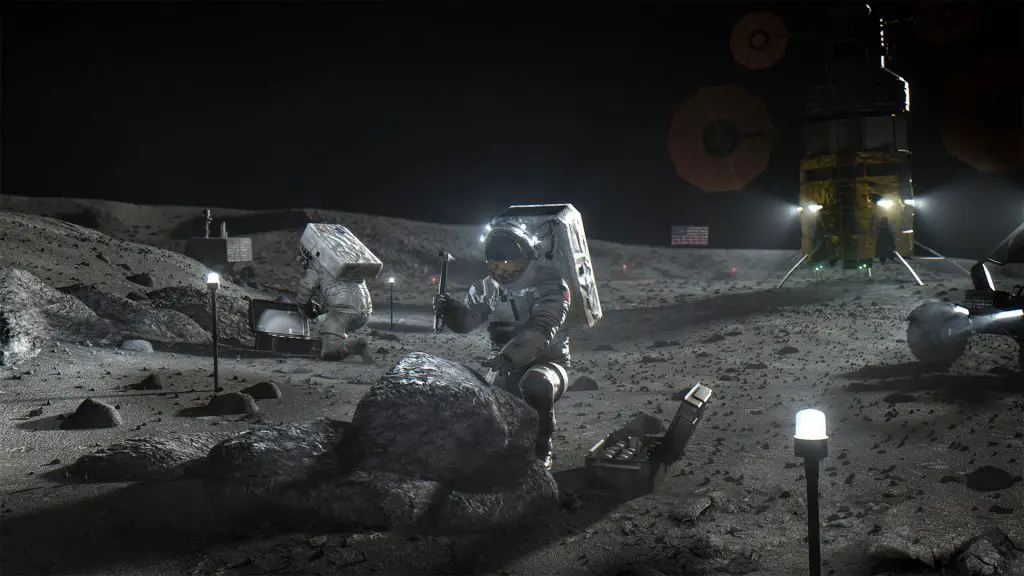
However, developing complex human spaceflight systems like the Space Launch System (SLS), Orion spacecraft, and lunar landers for the lunar return Artemis program is very expensive. As the program accelerates towards its ambitious goals – a sustainable lunar presence and eventual human missions to Mars – the financial pressure on other NASA divisions intensifies.
The Budget Showdown: Science Missions on the Chopping Block
The latest budget proposals emanating from the White House have revealed a concerning trend: significant proposed cuts to NASA’s science directorates, particularly planetary science.
Key Missions Facing Jeopardy:
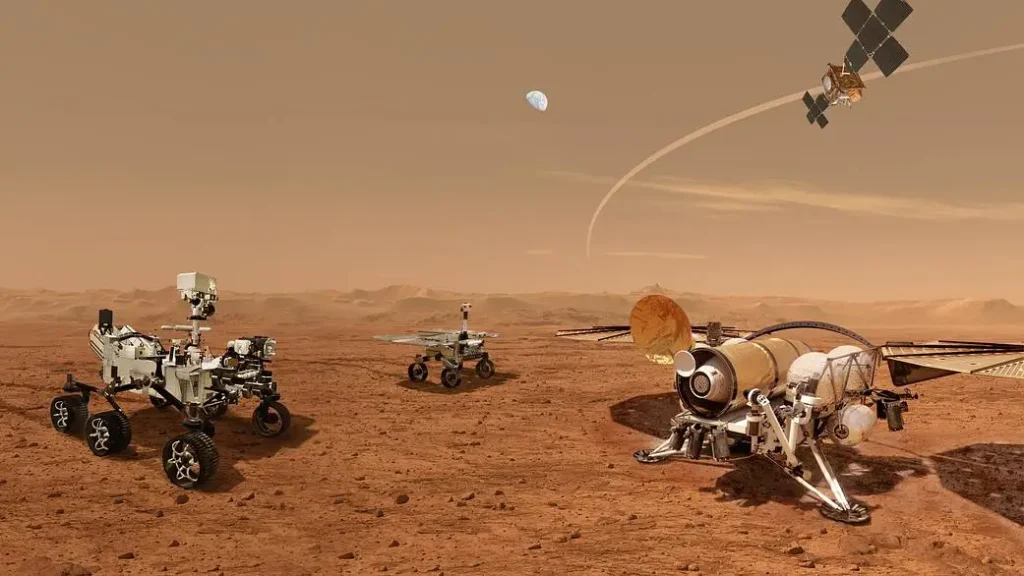
- Mars Sample Return (MSR): This is arguably the most affected. MSR is an incredibly complex, multi-mission endeavor designed to bring samples collected by the Perseverance rover on Mars back to Earth for detailed analysis. Scientists believe these samples could hold definitive clues to ancient Martian life. The project is facing massive cost overruns and delays, leading to proposed cuts that could push its return date far into the 2040s or even cancel significant portions of it.
- The Dilemma: Canceling or severely delaying MSR would represent a colossal loss, effectively stranding billions of dollars’ worth of samples already collected on Mars via the rover Perseverance.
- Earth System Observatory (ESO) / Earth Science Missions: These missions are crucial for monitoring climate change, weather patterns, and natural disasters. Proposed reductions here could hamper our ability to understand and respond to critical environmental shifts.
- Roman Space Telescope: While not as severely impacted as MSR, other flagship astrophysics missions are also experiencing budget pressures, potentially delaying their launch or reducing their scientific scope.
The Argument: Exploration’s Necessity or Science’s Sacrifice?
This situation has ignited fierce debate within the aerospace community, among scientists, and even within government:
- Pro-Exploration Argument: Proponents argue that human spaceflight inspires generations, drives technological innovation that benefits Earth, and is essential for humanity’s long-term survival as a multi-planetary species. Many would argue that human explorers are much more effective at achieving thorough and rapid sample collection/ interpretation – as the Apollo astronauts showed. They contend that the high costs of Artemis are a necessary investment in our future.
- Pro-Science Argument: Scientists argue that cutting robotic science missions, which deliver unparalleled data and insights at a fraction of the cost of human missions, is short-sighted. They emphasize that missions like MSR provide unique scientific returns that human explorers cannot replicate alone, and that Earth science is vital for protecting our own planet. They suggest that the current budget strategy might be “eating our seed corn” by sacrificing fundamental knowledge for future exploration.
What’s Next for NASA’s Budget and Planetary Science?
The final outcome of these budget battles is still uncertain. Congress plays a crucial role in appropriating funds, and often restores some cuts proposed by the executive branch, especially for popular science missions. However, the message is clear: NASA’s overall budget is under immense pressure, and tough choices are being made.
The challenge for NASA is to find a way to balance its ambitious human spaceflight goals with its equally vital scientific mandate. This might involve:
- International Partnerships: Sharing the burden and cost of massive projects like MSR with international partners (e.g., ESA) could alleviate financial strain.
- New Technologies & Efficiencies: Investing in more cost-effective development and launch technologies to reduce overall program costs.
- Strategic Prioritization: Making difficult but clear choices about which scientific endeavors can be supported without crippling the human exploration timeline.
Conclusion: A Tipping Point for Space Exploration
The current budget showdown represents a genuine crisis for planetary science missions and a crucial tipping point for NASA’s future direction. While the allure of Artemis and the vision of humans on the Moon and Mars is powerful, sacrificing foundational scientific research could have long-term detrimental effects on our understanding of the universe and our place within it.
The aerospace community is watching closely. The decisions made in the coming months will not only shape NASA’s budget for years to come but will also determine whether humanity’s reach for the stars is accompanied by a robust, continuous quest for scientific truth, or if one path must inevitably overshadow the other. The question remains: can NASA afford to do both, or will it be forced to choose between the Red Planet and fundamental scientific discovery?
Image credit: NASA